
Ed. note: This piece was originally published before the signing of Kyle Duncan.
Teams with a single star attacker are often called heliocentric. Given that, the 2025 Loons were more like an asteroid belt: No one big danger man to worry about, but enough smaller threats to get the job done most of the time.
In 2026, they’ll be back to a proper solar system, with a star bigger and brighter than Minnesota has ever had before — Betelgeuse to Emanuel Reynoso’s sun.
If James were 24 on a multiyear deal instead of 34 on a contract that may be functionally as short as three months, the Loons would have an opportunity across multiple transfer windows to build around him. As is, they’ll need to figure out how to adapt the current roster — plus or minus another player or two — to James’ strengths while also accounting for his well-known defensive weakness.
While I’m sure Cameron Knowles has preferred formations and tactics, I suspect he will find — as both the coaches before him did — that there’s a way to play that maximizes the team’s talent. There’s some amount of room for variation within that framework, but deviate too far from it and he risks ending up too clever by half and losing winnable games.
If I were tasked with getting this team ready to take the field against Austin, I’d start with a list of who I believed would most increase the team’s win probability, then build the formation that maximized the number of those players. Seems obvious; not everyone does it that way.
Here’s how I would rank the current Loons outfield players by how much they can add when they’re on the field, formation-agnostic:
- James Rodriguez
- Nectar Triantis
- Joaquin Pereyra
- Anthony Markanich
- Nicolas Romero
- Michael Boxall
- Carlos Harvey
- Wil Trapp
- Kelvin Yeboah
- Tomas Chancalay
- Bongi Hlongwane
- Jefferson Diaz
- Peter Stroud
- Owen Gene
- Morris Duggan
- Julian Gressel
- Momo Dieng
- Dominik Fitz
A couple immediate thoughts:
- Dominik Fitz and Tomas Chancalay are the biggest unknowns
I was pretty excited about Fitz when he signed, but from both off-the-record conversations and what has made it to the press, it sounds like he is simply not MLS-ready and may never be. If he can raise his level, he’ll be a nice piece to have off the bench, but I am not expecting him to be a difference-maker for Minnesota. I’m not even clear how much he’ll play.
Chancalay ending up next to Bongi Hlongwane on the list wasn’t intentional, but is appropriate. Both players have had flashes of superb play, but haven’t consistently lived up to high expectations. Both could be key parts of the Loons’ attack next year; both could end up getting shoehorned into less comfortable positions because their play doesn’t justify building around them.
I’d be curious to know what the plan for Chancalay was when he was signed — before Eric Ramsay’s departure — as well as what Knowles was planning to use him for on February 1 and what the plan is for him now. His skill as a progresser of the ball and comfort shooting from distance to create a rebound opportunity would make him a solid second striker, but that’s less of an option when James needs open space in front of him to create.
- The lack of a true right-sided fullback severely limits the team’s options
No formation puts the spotlight on a dynamic #10 like the 4-2-3-1, but without a two-way fullback, the Loons aren’t going to be able to make it work like it should and risk ending up severely lopsided in both attack and defense. Last year’s 5-3-2 suffered the same issue, especially in the second half of the season.
Right now, Julian Gressel is probably the first choice of actual right-sided fullbacks, but he absolutely could not handle his responsibilities in Ramsay’s system. Does he become playable when the team attacks more methodically and less like the ball is physically painful to possess? Possibly, but betting on that right now is asking too much based on what he showed last season.
Hlongwane deserves a ton of credit for being willing to do what the team needed and play right back last season, but it didn’t really work and isn’t worth repeating. It wasn’t a good use of his skills and opposing teams attacked his side mercilessly.
In formations where truly end-to-end fullbacks are truly necessary, I have Carlos Harvey penciled in. He doesn’t have much experience there and 1v1 defending isn’t his strongest skill, but he’s a capable defender and comfortable getting forward. In a sea of flawed options, he might still be the best bet. This is by far the team’s biggest need and that may be underselling it.
- Wil Trapp and Michael Boxall were the biggest challenges to rank
Trapp and Boxall were incredible last year, both as leaders on the field and individual contributors. They’re still the team’s leaders, but both are at the point in their career where age-related declines would be entirely normal. Right now, both are top-10 players for the Loons — Boxall ranking more highly owing to his long-throw ability — but the drop off for both could be stark if Knowles asks them to take on different roles than they did last year. Further complicating things, both have clear understudies in their positions: Owen Gene and Peter Stroud for Trapp and Morris Duggan for Boxall.
If Trapp and Boxall continue to play at the level they were at last year, there’s no issue; they’ll start and play the vast majority of minutes again. If they begin to slip, Knowles will have the unenviable task of correctly finding the point where their on-field leadership isn’t enough to justify their continued appearance in the lineup.
Getting the Loons’ 10 best on the field at once is going to be challenging, bordering on impossible. So how can they best utilize what they’ve got? Here are three interesting options.
4-2-2-2 Magic Rectangle
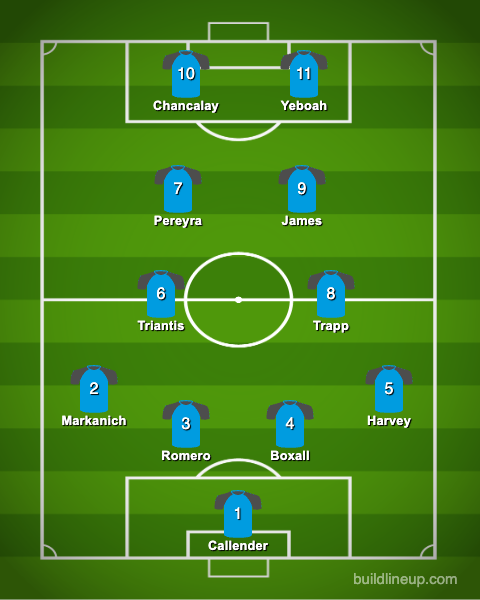
Offensively, the magic rectangle is an intriguing option. It forces Minnesota’s opponents into much greater defensive discipline than they’ve typically needed against the Loons because of the box’s potential for heavy interchanging and four strong attacking options up top. Any one of the top four could trigger an attack, supported by the other three, and the final shot could come from anywhere.
James and Chancalay are happy to shoot from outside the box, creating the kind of rebounds that Kelvin Yeboah and Anthony Markanich love to clean up. Trapp and Nectarios Triantis are both very capable of pressing up higher into the midfield to help recover loose balls and creating overloads or dropping back to help bolster the backline in case of a counter.
The heavy interchanging and high-intensity press may not suit James at this point in his career, but there are plenty of bodies in the middle of the field to cover for that weakness.
Defensively, it’s less of a fit. Because of the lack of width, this is a formation that requires highly adept fullbacks to keep from giving up quick attacks down the flanks and to keep the center of the park from getting too clogged. That won’t be an issue on the left, where Markanich thrived as a two-way player last year, but no one on the roster can do that work on the right.
If the Loons were to get a capable right back, then Harvey — who plays as a defensive midfielder for Panama rather than a center back — could slide up into the box alongside Triantis. Both are superior defenders with strong attacking instincts, further giving Minnesota the ability to attack aggressively without leaving huge gaps in behind.
The physical demands of the 4-2-2-2 make it unappealing for a lot of teams, but the Loons have depth in right spots to make it work, particularly if they’re protecting a lead with 20-30 minutes to go. Trapp, Gene, and Stroud can all step into the last bank of two and move the ball effectively. Hlongwane is a strong replacement for James, giving more width and better defensive effort, plus his speed plays particularly well against tired defenders. If they really want to lock things down, shifting into a 5-4-1 by taking a striker out for Diaz is a simple way to do it without forcing anyone into an odd position.
This is one player away from being ideal and a complete non-starter if they can’t patch that hole.
4-4-2 Diamond
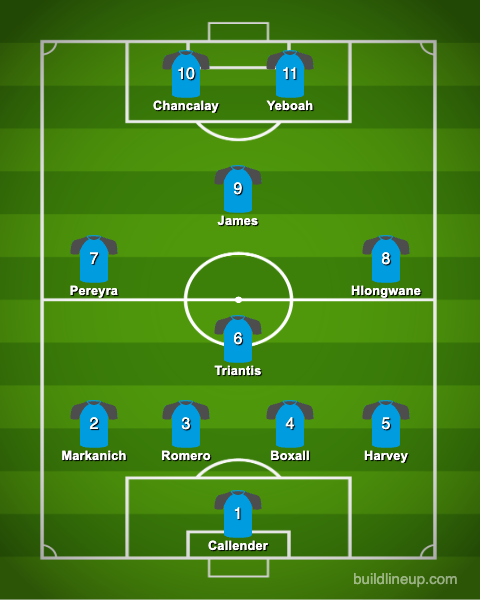
The 4-4-2 is the vanilla ice cream of the soccer formation world: consistent, reliable, and surprisingly good with the right ingredients. So if the 4-4-2 is vanilla ice cream, the 4-4-2 diamond is vanilla frozen yogurt. More or less the same thing, but might suit you better depending on what your ingredients are.
This formation takes pressure off Hlongwane to be an endline-to-endline player and allows him to attack more directly while also taking advantage of his willingness to defend by keeping him close to James.
It’s much more balanced than the magic rectangle and puts James on full display, allowing him to run at backtracking defenders with good options ahead of him and on both sides, forcing covering defenders to stay honest instead of collapsing in.
I think this is a reasonable formation for Minnesota to play, but two things stand out as potential issues. First, of the front six, only Pereyra played a full season last year in anything like the position they’re being asked to play. Second and relatedly, there is a ton of pressure on Triantis to snuff out any breakouts in the midfield.
If the wings were well-established in that role, they would know how to support him without leaving a gaping hole. As is, his 1v1 defending is going to be tested frequently, and the Loons’ front-loaded schedule means he’ll be facing some of his stiffest challenges before his defensive partners in the midfield ramp up.
The learning curve could be steep, but it’s probably still the best option for the team as it’s currently constructed.
4-3-2-1 Christmas Tree
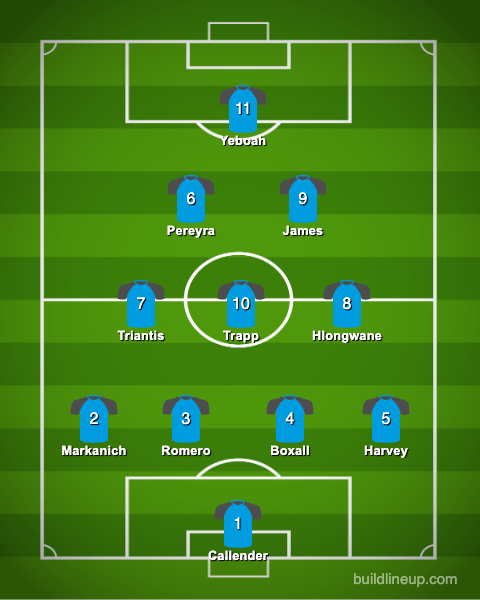
Both of the previous formations assumed that Chancalay performs well enough to justify a starting spot. If the Loons should decide otherwise, Yeboah is perfectly capable of being a solo striker, but having both he and James alone up top isn’t likely to result in a consistently dangerous attack.
The Christmas tree gives Minnesota a little more defensive solidity than either of the two-striker formations did and solves the problem of the 4-2-3-1, taking defensive pressure off the fullbacks by pairing them with a defensive midfielder.
Unfortunately, that defensive foundation comes at the expense of attacking venom. I’m comfortable with the block of three pressing up to support the attack, but none of them is really going to command a defense’s respect in a way that opens meaningful space for Yeboah or James. With all six pressed into the attacking third, particularly if the wings don’t hold their width, the field is unhelpfully compressed and there’s a space in front of the back four big enough to land a lunar module. A long ball over the top is trivial by comparison.
I don’t expect a first-year head coach to go for something as atypical as the 4-2-2-2, even if I believe it’s the best use of the available talent… plus a new right back. A 4-4-2 diamond works fine, the more traditional 4-4-2 does as well, but I’m concerned that for continuity’s sake, they’ll continue with something like the 5-3-2 that doesn’t feature James so much as isolate him.
The Loons are far from the only MLS team likely to be forced to use a formation that’s close to fitting but isn’t perfect. But failing to bring in a right back and resorting to a defense-first formation out of momentum isn’t the same thing as Yeboah being a slightly different striker than James is used to playing.