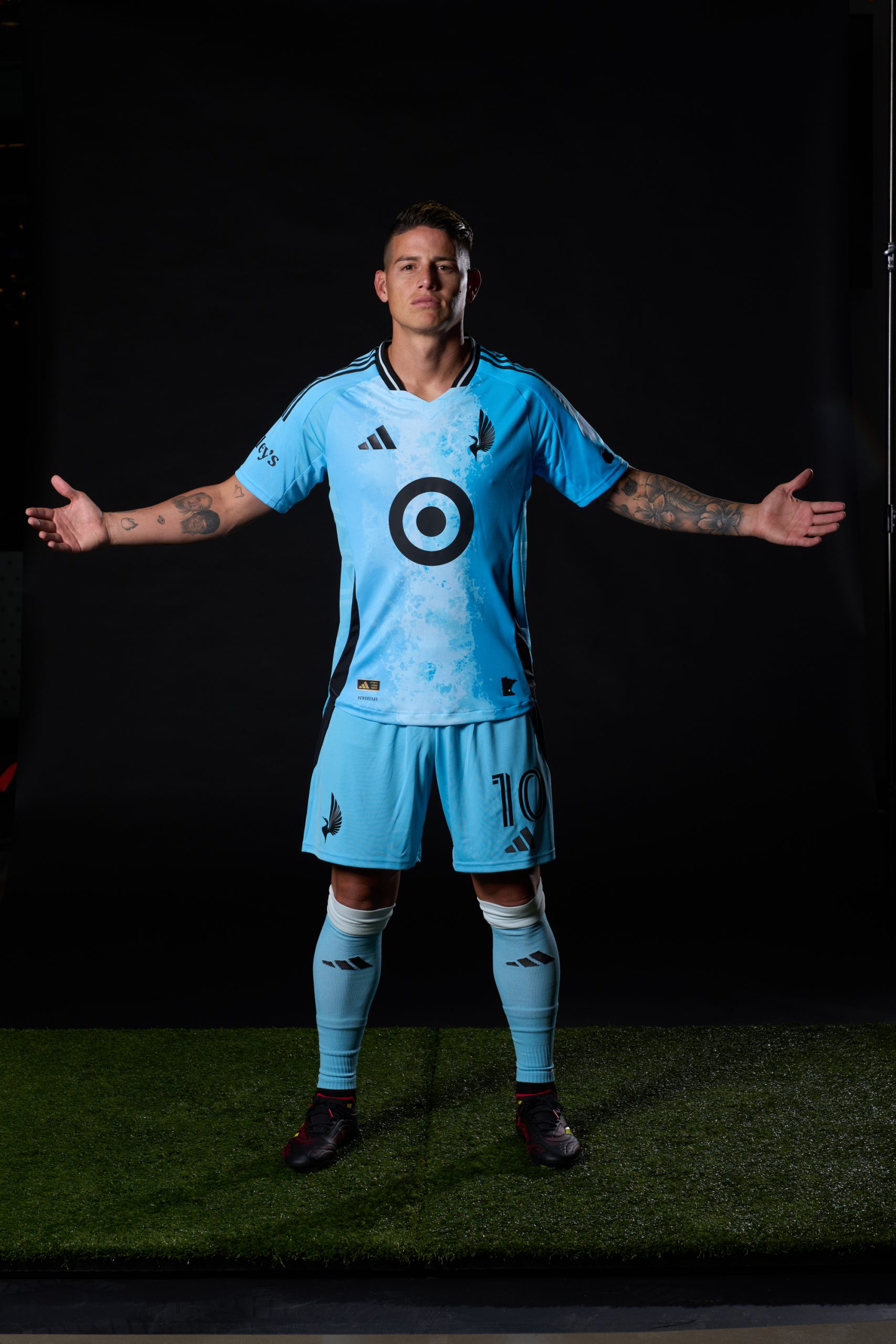
Honestly, I’m just as surprised as you are.
Going into this offseason, I had several ideas for ways the Loons could improve, maybe even a few players I was interested in bringing in. Most of those plans were predicated on Dayne St. Clair and Robin Lod coming back, and was certainly predicated on Eric Ramsay coming back. Well, time makes fools of us all.
I could have come up with a thousand offseason plans accounting for a hundred different variables and I wouldn’t have thought to bring in James Rodriguez. I probably would have suggested an elaborate heist of the Musée d’Orsay, followed by high-stakes art forgery, and beating out Manchester City for the signature of Antoine Semenyo before I came up with James Rodriguez.
This isn’t to say it’s a bad move — quite the opposite, I like it a lot — but James is almost the exact opposite of the kind of players the Loons had been bringing in in the last few windows.
They’d been targeting younger players; James is 34.
They’d been targeting players that move the ball quickly rather than sitting on it; James had more touches last year than almost any attacker in this hemisphere.
They’d been targeting players that play dogged defense even from attacking positions; James is in the sixth percentile for defensive actions among attacking midfielders.
James’ set-piece prowess is the one point of overlap between his skills and Ramsay’s sufferball scheme, but his arrival is as sure a sign that the Loons aren’t going to spend another season giving opposing teams the ball and daring them to break down the Loons’ low block.
The chasm between what James does well and what the Loons have been known for recently is part of why the reaction to this deal hasn’t been a discussion of whether it was good or bad, but rather pure shock that it happened at all. Everybody’s got jokes.
I’ll confess, my immediate reaction was cynical. It felt like a panic move. Unable to attract other players — at least in part through no fault of their own — the Loons grabbed a big-name player looking for minutes ahead of the World Cup.
Worst case scenario, you sell a bunch of shirts.
The season starts in 10 days; the lights are on in the bar, time to either go home alone or take a chance with someone looking for a friend at closing time. It could be worse, they could have tried this and ended up with Dele Alli — at least James hasn’t already missed an absolute sitter at Allianz Field!
All of the cynical pieces are still true, and they’re likely why this deal got done at all, but one tiny change from the initial reports to the final contract makes a huge difference to me: The option after the World Cup isn’t James’ or even a mutual option, it’s a team option.
James may still look like a star for Colombia and leave in the summer for more prestigious pastures, but the Loons may get a fee if he does. If nothing comes, they get a full season from the third-best playmaking attacker in LigaMX last year without giving up a DP slot or transfer fee.
Get past the shock of James in Minnesota, and it’s virtually impossible to argue this is a bad deal.
Does that mean this deal is going to work? Anyone who tells you they know one way or the other is lying. This is a dice roll.
Much of the criticism has focused on the fact that James needs the ball at his feet to be effective — he was in the 99th percentile for touches last year for all midfielders in the western hemisphere — and the Loons weren’t just the lowest possession team in MLS last year, they were one of the lowest possession teams in MLS history.
I will fully agree that James simply does not fit on Ramsay’s 2025 Loons.
Good thing it’s 2026 and the coaching staff has changed substantially.
In the next piece, I’ll dive into how James can fit with this team. For now, ignore the noise: This is a super fun signing and one that will dramatically help the Loons move from the team they were to the team they want to be in the post-Ramsay era.